…
Honey Festival
We prove
that in a community connected by a good experience, there is always a path to understanding.
We know
that bees are a natural bioindicator of a clean environment, free from radioactivity.
We believe
that at SERAW we work ‘With care for the future’.
The Idea
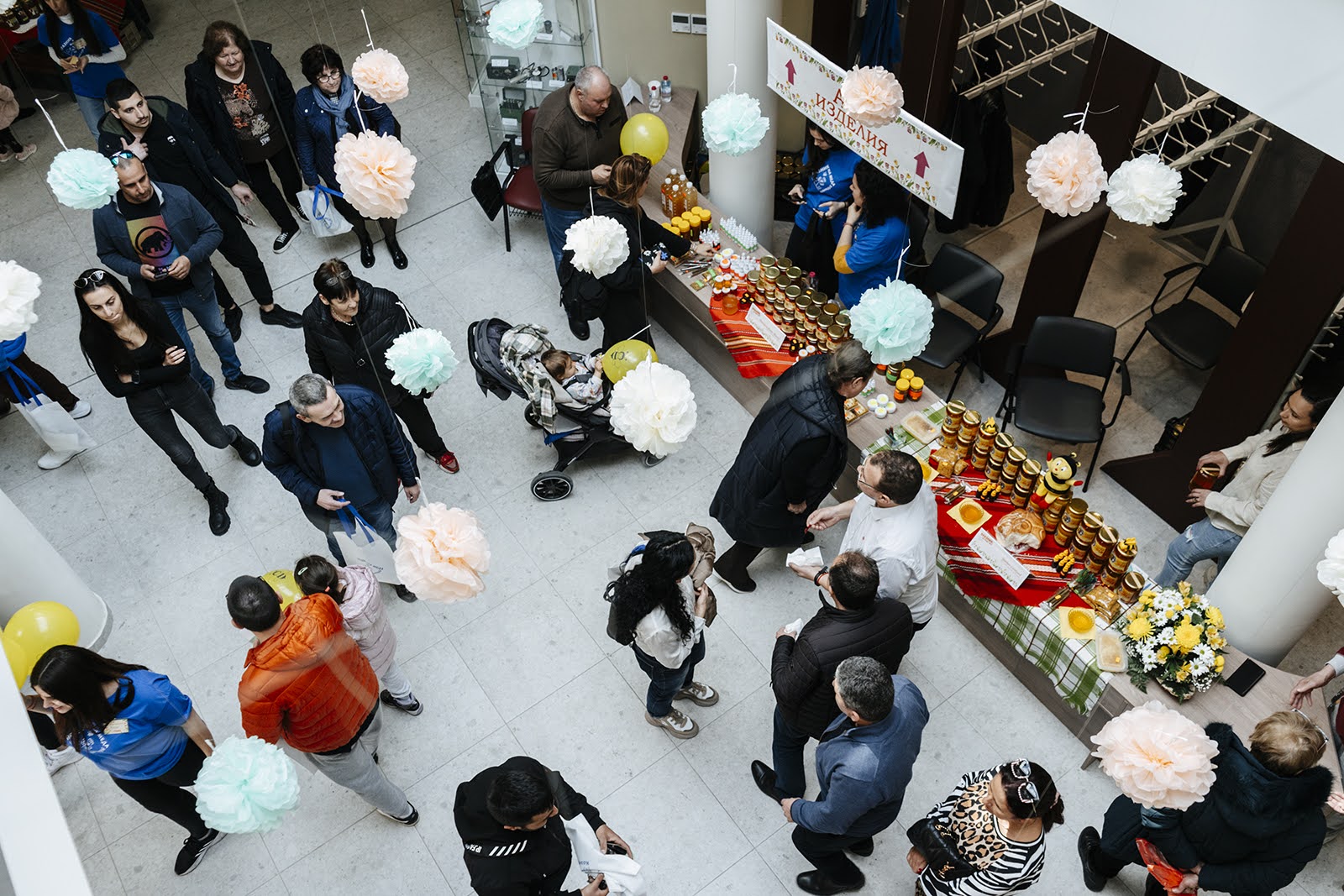
The primary reason for the initiative is related to the fact that the existence of nuclear facilities, including a plant for processing low and intermediate level radioactive waste (RAW) on Kozloduy NPP site and the shutdown nuclear units of the nuclear power plant being RAW management facilities, does not hinder the production and successful placing on the market of bee honey from the Kozloduy region.
More generally, the initiative also focuses on overcoming natural human fears, collectively referred to as the umbrella term “radiophobia”, by providing accessible information on the nature, potential impact and safe management of low- and intermediate-level radioactive waste, including during decommissioning of shutdown nuclear facilities.
As a main priority in seeking public trust for its core activities, SERAW defines engaging with local communities in the municipalities where RAW management facilities are established.
A guiding principle in employing this strategy is the active participation of the enterprise in the social life of these communities, including through organizing its own events compliant with the community’s values, traditions and interests.
The essence
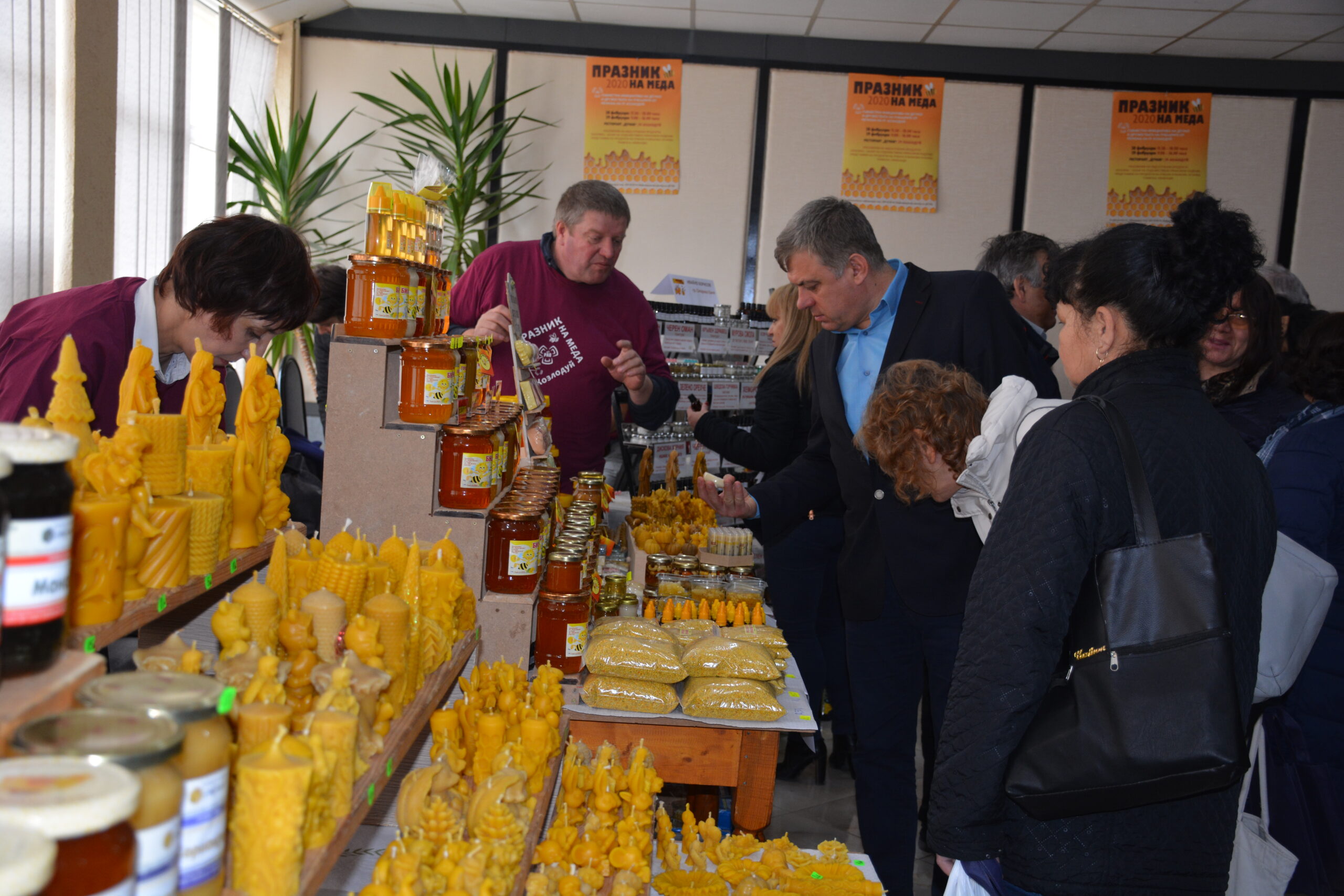
In relation to identified information deficits and prejudices and in support of local producers, in 2009 SERAW organized for the first time a one-day exhibition – the Honey Festival. In the course of the exhibition beekeepers from the region showcased their production to the town residents, talking about the highly appreciated quality of honey which was demonstrated by certificates issued by independent laboratories. The event quickly gained popularity due to its educational value about the healing properties of bee products and the positive emotional impact on participants and visitors. Already with its first edition, the festival proved to be a nice event and occupied a niche in the social life of Kozloduy Municipality. This outcome predetermined its transformation into an annual tradition, which SERAW is committed to in the long-term.
Venue and time of the event
The Honey Festival is held annually in February. It is tied to the Day of St. Haralambos – a patron saint of beekeepers in the Bulgarian tradition, but varies (depending on the days of the week). For the fifth anniversary of the event, it was organized on two days – Friday and Saturday, and this practice has been maintained in order to adequately respond to the increasing interest of visitors. Since 2022, the festival has been held in the halls of a new modern building – the Information Centre for Decommissioning of SERAW.
Target audience
Initially, the project was aimed at the local community in Kozloduy Municipality, but it has gradually expanded its scope to Vratsa Province and Northwestern Bulgaria, and in recent years – all over the country.
Target groups: bee honey producers, representatives of the craft industry, students, teachers, retired employees, healthcare personnel, SERAW and Kozloduy NPP employees, local authorities, media, non-governmental organisations.
Implementation
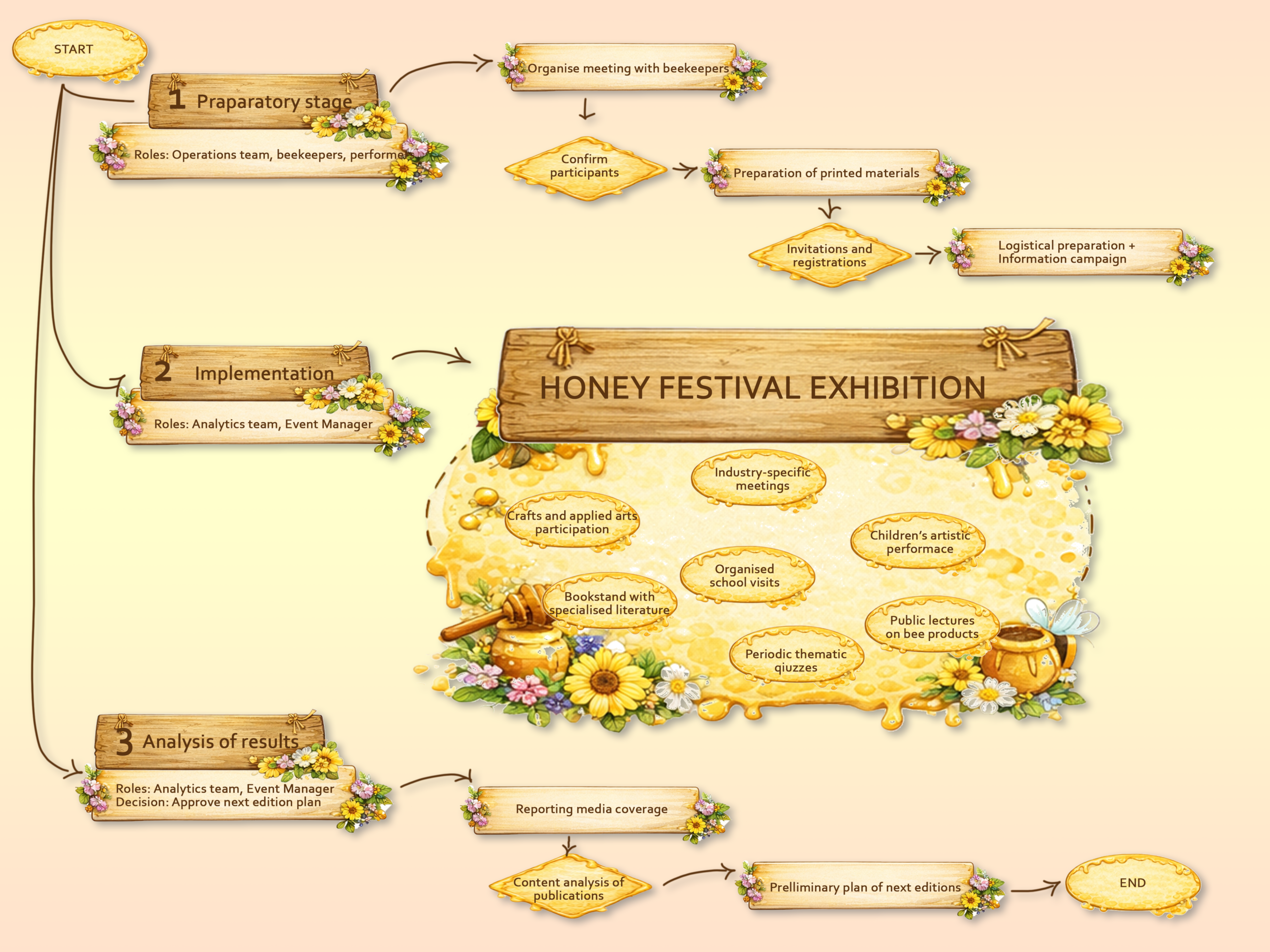
1. Preparatory stage – begins, as a rule, at the very beginning of the calendar year and includes the following main points:
*Organisational meeting with beekeepers to determine the highlights for each individual edition of the initiative;
*Preparation of printed materials: poster, flyer, leaflet, invitation, certificate (text composition, prepress, press release);
*Invitations to participants, registration, notification letters to educational and other institutions;
*Logistical preparation (hall, technical support, etc.);
*Information campaign – local, regional and specialized media, social media, outdoor advertising, flyer distribution.
2. Implementation
The Honey Festival is an exhibition mainly with the participation of local beekeepers. They are joined by representatives of crafts and applied arts, there is a bookstand with specialized literature. The accompanying programme includes children’s artistic performances, periodic thematic quizzes, and organized visits by elementary school children.
A mandatory element of the event is a publicly accessible lecture by a specialist in the field of the application of bee honey and bee products for a healthy lifestyle. During some of the editions of the festival, industry-specific meetings on current topics for honey producers were held.
3. Analysis of results:
*Reporting media coverage;
*Content analysis of publications;
*Drawing up a preliminary plan for the next edition of the event.
Resources used
The event budget is entirely for the benefit of promotion and logistics (printed materials, rent, technical support, etc.). The implementation activities are carried out through efforts by SERAW employees and volunteers from beekeeping societies, young people from the Baraka Centre for Personal Development, WiN (Women in the Nuclear Industry) – Bulgaria.
EFFECTS/RESULTS
The Honey Festival programme is being improved every year; its mission is expanding.
It is a place for meetings on current topics in the beekeeping industry. As a result, local beekeepers received an invitation and exhibited their products in the European Parliament building in Brussels. The producers also received valuable information about the possibilities for European financing of their activities. The beekeeping societies were strengthened, their members gained confidence in their work.
Children, students, teachers and all visitors gained new knowledge about the healing properties of honey and bee products. The general culture of the region for their prophylactic use increased.
SERAW created and has been developing the Honey Festival – a popular and publicly accessible event that annually contributes to the knowledge of all ages about an environmentally friendly lifestyle and respect for the environment. The event provides support for people who practice the noble profession of “beekeeping” against the backdrop of the unfavourable global trend towards a sharp decline in bees.
Participants and visitors received information in plain language about RAW and the Kozloduy NPP Units 1 to 4 Decommissioning process in order to find a solution to their concerns on the topic.
The first edition of the festival in 2009 involved 6 beekeepers and the event was attended by about 300 people.
In 2025, the festival attracted 16 beekeepers, 10 manufacturers of natural organic products, 14 creators of natural handmade souvenirs and over 2,000 visitors.
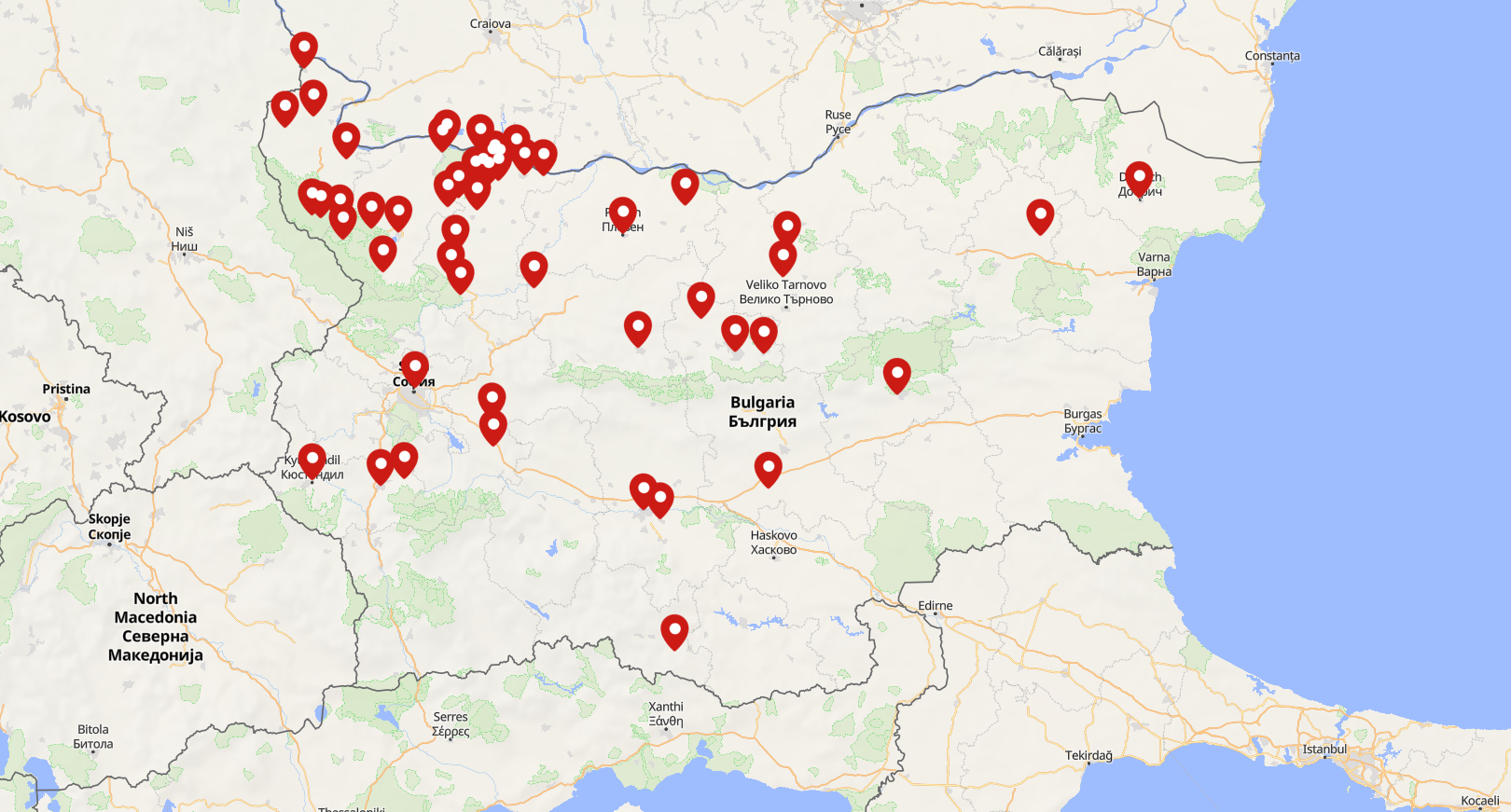
Throughout the history of the Kozloduy Festival, beekeepers and artisans from 52 settlements in Bulgaria have been guests as participants, who have become ambassadors of the Enterprise’s mission in the country.
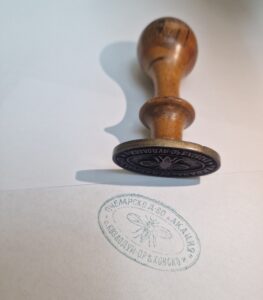
The local community provided to SERAW the history of beekeeping in Kozloduy, as collected by a local historian. The enterprise was entrusted with preserving the seal of the first beekeeping society.
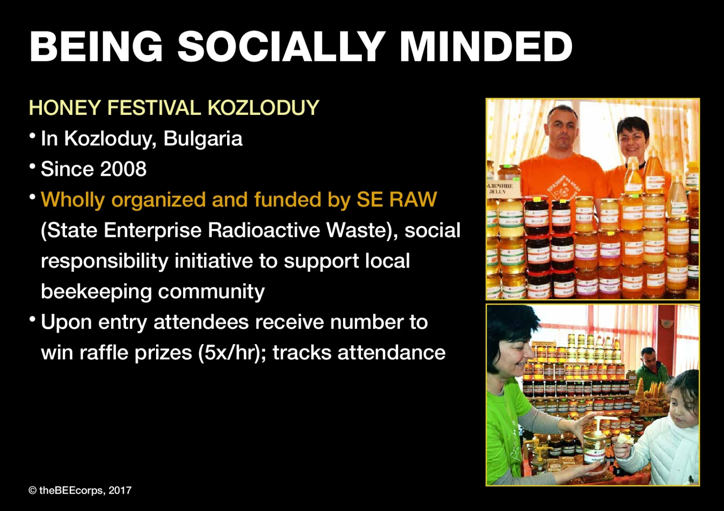
The Honey Festival was presented as a good practice and social initiative at the Apimondia International Apicultural Congress, Istanbul, Turkey, in the period 29 September – 4 October 2017. The presentation was made, on his own initiative, by the American expert beekeeper living in Spain, Steve Rogenstain, who contacted SERAW on that occasion, thanks to the information about the festival on the official website of the Enterprise. This was the only information about a Bulgarian beekeeping event announced during the world forum.
Feedback and response (Opinions and statements of citizens or stakeholders)
Every year, the festival ends with a ritual where impressions are shared:
“There is no more pleasant atmosphere than the one in Kozloduy, no other town provides us with such conditions and the mood is magnificent!”
Maria Ivanova, beekeeper from the village of Selanovtsi
“I personally have not participated in a more positive and inspiring honey festival. I thank the organizers, the participants and all the citizens of Kozloduy.”
Volodya Petrov from Enyovche publishing house
“With each passing year, the festival becomes more diverse and marks a positive change, it gets better and better! I am glad that those of us who previously hesitated to participate are now here. I would like to thank SERAW for the invitation, thank you for this festival!“
Dilyan Ivanov, a beekeeper having 19 years of experience from the village of Harlets, Kozloduy Municipality
Lessons learned
SERAW received confirmation of the chosen approach to interaction with stakeholders – openness, equality and dialogue in a created environment with a positive atmosphere.
The path to trust is built with persistence and intellectual and emotional commitment.
The Honey Festival initiative has evolved from an idea for a communication channel into a manifestation of corporate social responsibility that goes beyond the immediate pragmatic tasks of maintaining dialogue.
Most importantly: While informing, we achieve a culturally appropriate context in which to talk about our work in order to gain trust and support for the safe management of RAW – the only alternative for the generated RAW, so that modern society does not leave it as a burden for the generations to come.
Video
…
Gallery
Corporate profile
State Enterprise Radioactive Waste (SE RAW) was established on 1 January 2004 by a Decision of the Bulgarian Government pursuant to the Act on the Safe Use of Nuclear Energy. The aim was to establish a national operator for the management of radioactive waste in the country outside the locations where it is generated, in accordance with the National Spent Fuel and RAW Management Strategy and with international practices.
We are charged with the responsible task of protecting the environment and caring for the health and safety of people by managing and storing radioactive waste generated by nuclear applications in energy, industry, medicine and everyday life.
Our core activity is related to the collection, handling, pre-treatment, processing, conditioning, storage and disposal of radioactive waste, including decommissioning of radioactive waste management facilities.
The activity is carried out in three geographical locations within the country and in four Specialized Divisions employing approximately 1010 people.